
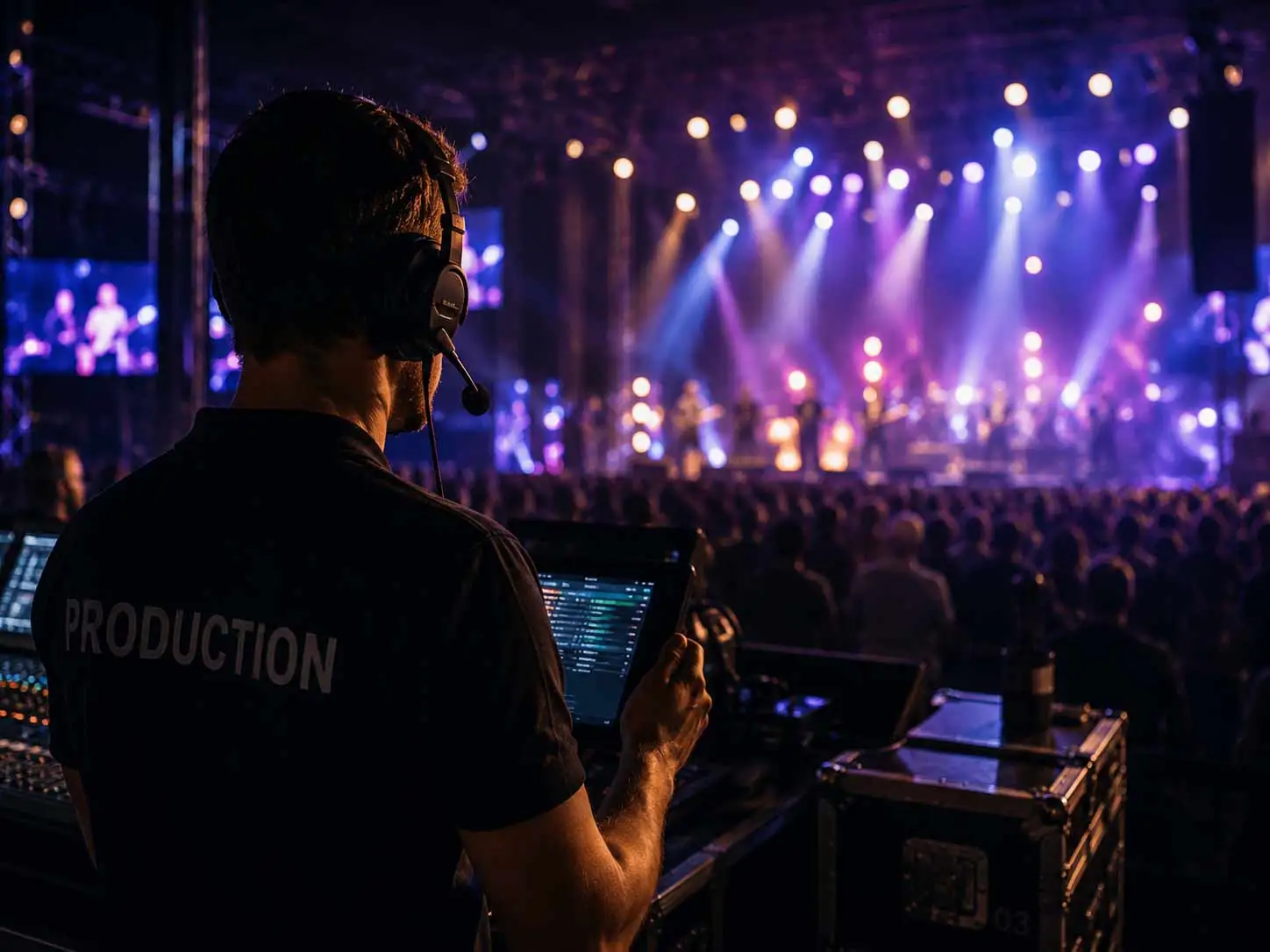
The Event Needs One Clear Point of Control
Ronter Sound Events coordinates the moving parts of an event so timing, vendors, production, stage flow, setup, guest movement and event-day decisions stay connected.
Coordination is what keeps the event from becoming a collection of disconnected parts.
Sound, lighting, artists, photo, video, vendors, venue access and the event schedule all affect one another. Without coordination, every team may do its own job — but the event can still feel unclear, rushed or fragmented.
We help organize the production flow so each part has a place, a time, a point of contact and a clear relationship to the full event.
What needs to be controlled before and during the event.
Production Coordination
Connecting the technical, creative and operational parts of the event into one working plan.
02Vendor Coordination
Keeping vendors aligned with timing, access, setup needs and event-day communication.
03Timeline Planning
Structuring the event timeline so arrivals, setup, program moments and transitions make sense.
04Production Schedule
Organizing the production team, vendors and setup windows around the actual event schedule.
05Event Timeline
Mapping the guest-facing schedule and the behind-the-scenes timing that supports it.
06Run of Show
Defining the order of moments, cues, transitions, speeches, performances and key actions.

Someone has to know what happens next.
Event-day coordination is about decision-making, timing and communication. It keeps the event moving when vendors arrive, guests enter, performers get ready, speeches begin, lighting changes, sound cues happen and the room shifts from one moment to another.
How coordination moves through the event.
Before Setup
Venue access, vendor timing, production schedule, equipment arrival and communication points.
During Setup
Load in, staging, sound, lighting, photo/video position, vendor placement and readiness checks.
During Program
Run of show, show calling, guest flow, stage management, transitions and live adjustments.
After Event
Breakdown coordination, load out, vendor movement and closing the production day properly.
The event starts before guests arrive and ends after they leave.
Coordination includes the parts guests usually do not see: access, load-in, setup order, vendor movement, backstage timing, breakdown and load-out. These details decide whether the event feels smooth or stressful.
Coordination changes with the format of the event.
Vendor timing, stage flow, audience movement, artists, technical coordination and public programming.
Corporate EventsSpeakers, presentations, brand moments, AV timing, guest arrival and controlled room flow.
ConcertsStage management, run of show, sound checks, performers, show calling and backstage control.
WeddingsCeremony timing, reception flow, speeches, entertainment, vendor movement and guest experience.
Community EventsPublic programming, cultural moments, guest flow, vendor coordination and event logistics.
Private CelebrationsArrival, music, entertainment, speeches, food service, transitions and celebration flow.
Coordination only works when it is connected to the services it controls.
The coordinator has to understand what sound, lighting, artists, photo, video and production teams need in order to do their work at the right time.
Tell us what needs to happen. We’ll help organize the flow.
Send the event date, location, guest count, event type and the production elements involved. We’ll help define the coordination support that makes sense.