
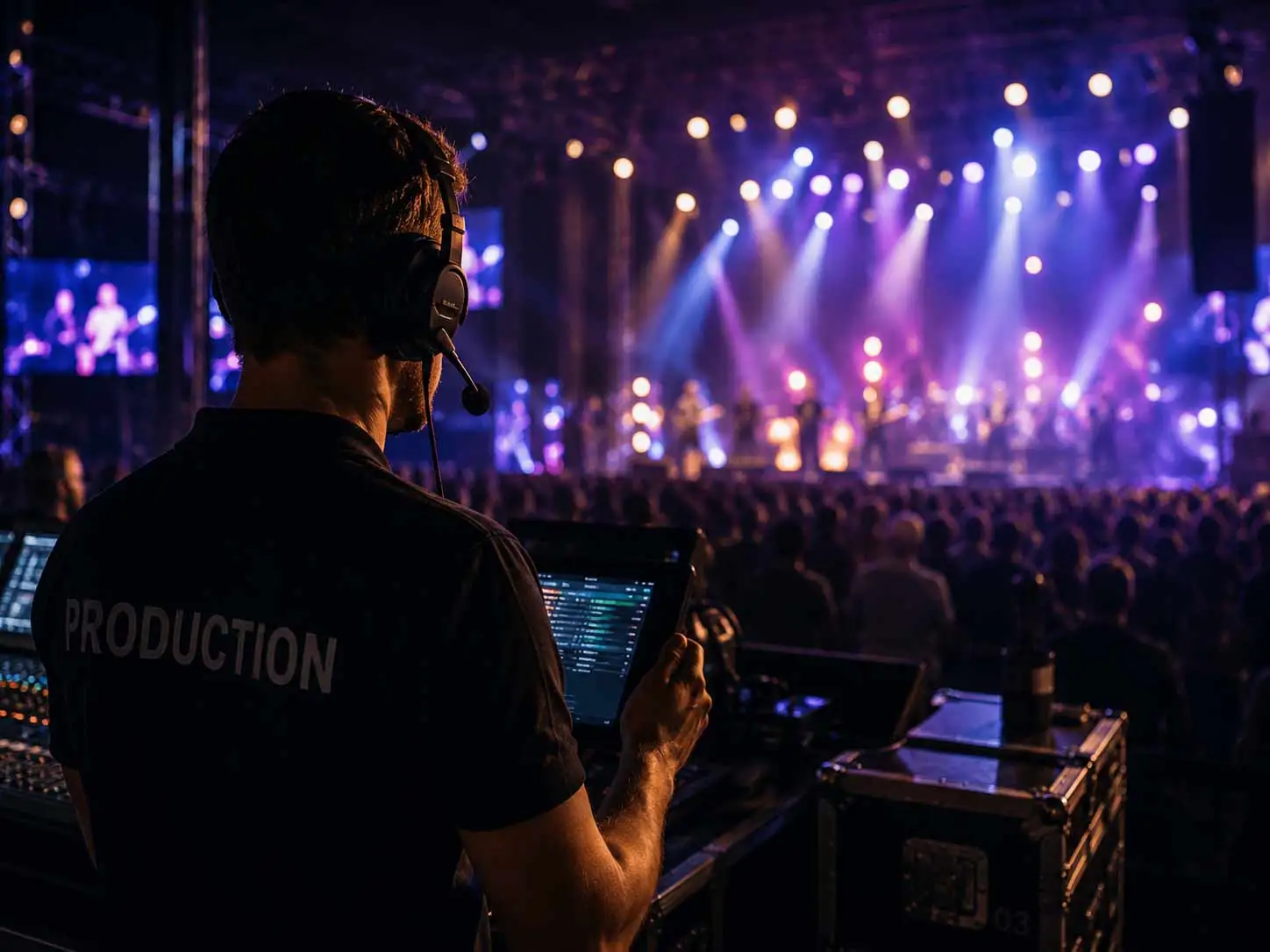
Backstage Management for Events With Presenters, Artists and Crew.
Ronter Sound Events manages backstage flow so performers, presenters, artists, crew, timing, cues and event operations stay organized before each live moment reaches the audience.
The audience sees the moment. Backstage management controls what happens before it.
Backstage management keeps the hidden side of the event organized. Presenters need to be ready, performers need to know when they enter, crew members need clear communication, and the production team needs each backstage movement to support the live program.
Backstage is where many event problems either appear or get prevented.
A delayed presenter, an artist who is not ready, an unclear entrance, a missing microphone or a confused crew handoff can affect the whole program. Backstage coordination helps keep those details under control before they reach the room.
We organize backstage movement around the event timeline, run of show, stage management, vendor needs and live production communication.
Every backstage movement should support the live event flow.
Preparing presenters, performers, hosts and support teams according to the live event sequence.
02 Stage ReadinessMaking sure people are ready before they enter, speak, perform, announce or transition on stage.
03 Cue SupportSupporting live cues by keeping the next people, props, microphones or transitions ready backstage.
04 Artist and Vendor CommunicationCoordinating performers, entertainment teams, presenters, venue staff and production support around backstage needs.
05 Backstage OperationsConnecting backstage movement with access, timing, vendor routes, room flow and event-day logistics.
From preparation to live execution.
Event Program
We review the event type, run of show, presenters, performers, artists, crew, stage moments and production needs.
Backstage Plan
Entrances, waiting areas, readiness timing, communication points and backstage responsibilities are organized.
Live Readiness
Before each key moment, backstage management helps make sure the right people and support elements are ready.
Event-Day Adjustments
When timing changes, backstage support helps the event stay calm and connected to the live program.
Backstage management matters when people need to be ready before the room sees them.
Concerts, festivals, corporate events, weddings, community events and private celebrations can all include presenters, performers, hosts, speakers, artists and production teams working behind the visible program.

A calm live program usually depends on controlled backstage communication.
Guests should not see hesitation behind a transition. They should not feel that a speaker was missing, a performer was late, or the next moment was uncertain.
Backstage management helps create that sense of control by preparing the hidden side of the event before each visible moment begins.
Backstage management has to connect with the full event system.
Backstage movement should not interrupt guest flow, audience access or the visual experience of the event.
02 Backstage SetupLoad-in timing and setup coordination help backstage areas become ready before performers or presenters need them.
03 Room and Support ReadinessStage areas, holding areas, vendor zones and production support need to be prepared before the program begins.
04 Timeline AlignmentBackstage readiness should follow the event timeline and adjust when timing changes.
05 Post-Program MovementAfter the live program, backstage movement should connect with vendor wrap-up, guest exit and breakdown coordination.
Tell us who needs to be ready before each live moment.
Send the event date, location, event type, guest count, presenters, performers and production elements involved. We’ll help define the backstage management support that fits your event.