
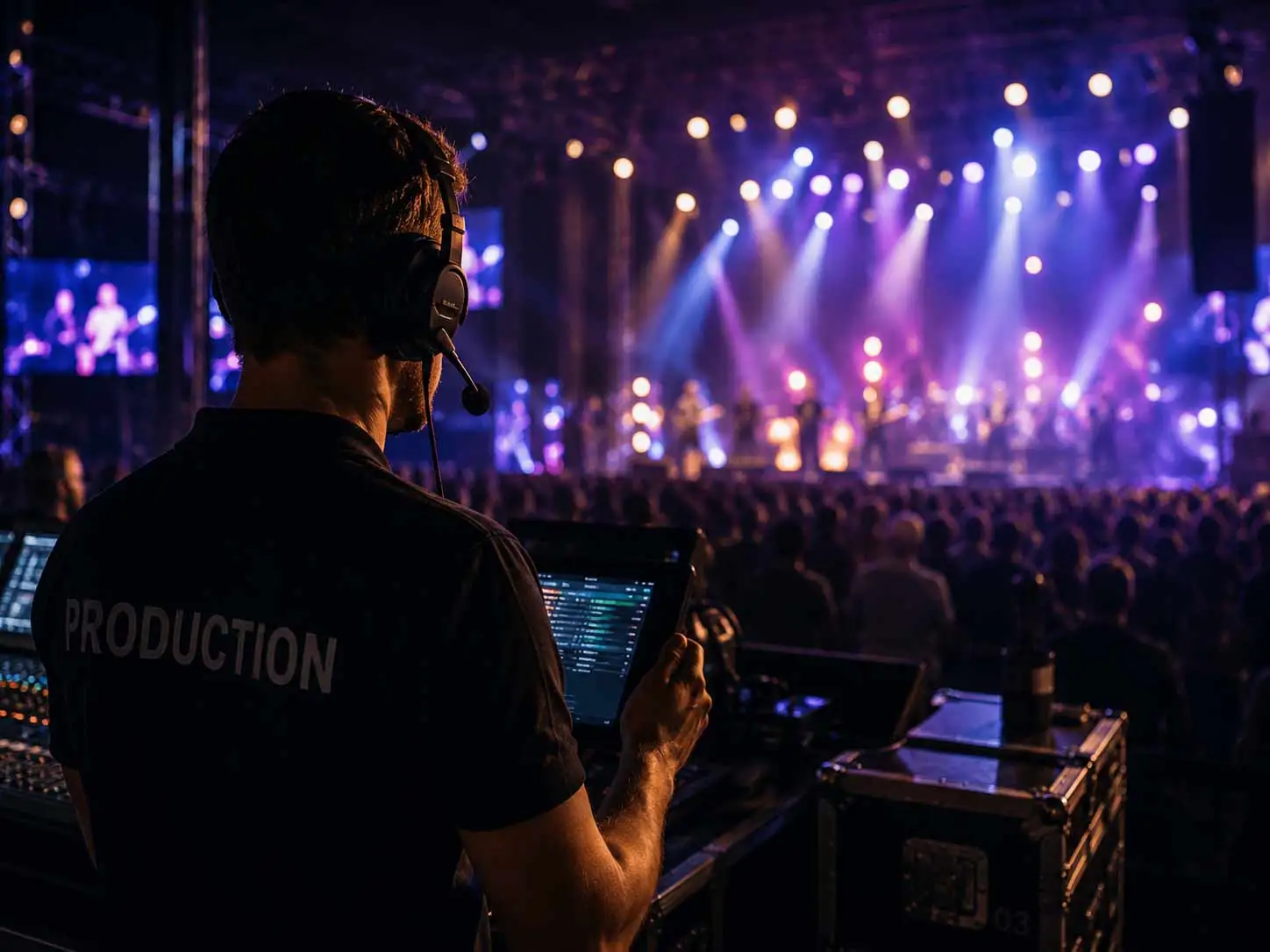
Load In Coordination for Organized Event Setup.
Ronter Sound Events coordinates load in timing, equipment arrivals, vendor access, setup order and production movement so the event can be built with control before guests arrive.
Load in is where event coordination becomes real movement.
Before the event begins, equipment, vendors, production teams and venue requirements all have to meet in the same space. Load in coordination gives that movement a clear order so setup does not become crowded, delayed or unclear.
The order of arrival affects the whole setup.
Sound, lighting, staging, entertainment, photo, video, venue staff and vendors often need access to the same space before the event opens. If the arrival order is unclear, teams can block each other, delay setup or create avoidable pressure.
Load in coordination helps organize who arrives when, where they enter, where equipment goes, and how each setup step supports the next one.
Every arrival should support the setup plan.
Planning when vendors, crews, equipment and production support arrive before setup begins.
02 Venue AccessOrganizing entry points, loading areas, elevators, parking, staging zones and access instructions.
03 Vendor CommunicationMaking sure vendors understand where to arrive, when to unload and how their setup fits the schedule.
04 Setup OrderCoordinating the order of installation so production, vendors and venue teams do not work against each other.
05 Production AlignmentConnecting load in with the full production plan, event timeline and event-day coordination needs.
From access planning to room readiness.
Venue Access
We review loading areas, entry points, elevator access, parking, venue rules and setup restrictions.
Equipment and Vendor Timing
Equipment arrivals, vendor load in, production crew timing and setup needs are placed into the schedule.
Setup Sequence
The load in plan supports the correct setup order for sound, lighting, staging, vendors and room layout.
Ready for Event Flow
Load in connects to setup coordination, timeline planning, guest flow and the production schedule.
Load in planning changes depending on the event format.
Concerts, festivals, corporate events, weddings, community events and private celebrations each have different access needs, vendor timing, equipment movement and setup pressure.

A calm event usually begins with a controlled setup window.
Guests should enter a space that feels ready. They should not feel the pressure of a rushed setup, blocked movement, late equipment or confused vendor arrivals.
Load in coordination helps protect that first impression by organizing the operational work before the event becomes visible.
The load in plan should connect with the full coordination system.
The way equipment comes in should also support how it leaves after the event.
02 Breakdown CoordinationSetup and breakdown should be planned together so closing movement stays controlled.
03 Backstage ReadinessBackstage areas, performer zones and support spaces often depend on load in and setup timing.
04 Guest Flow ProtectionLoad in should be finished or separated before guest movement begins whenever possible.
05 Timeline ConnectionThe load in schedule should support the event timeline, not create pressure against it.
Tell us what needs to arrive before the event starts.
Send the event date, location, event type, guest count, vendor list and production elements involved. We’ll help define the load in coordination support that fits your event.